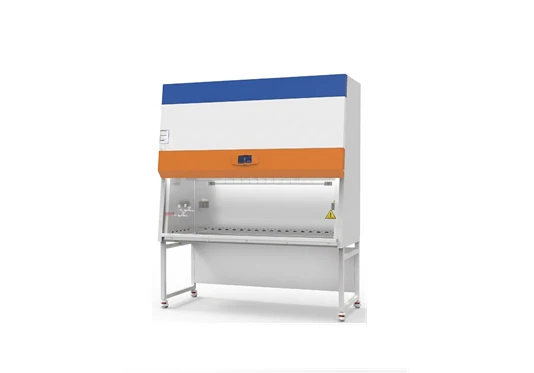
Class I: operator and environment protection only
A Class I cabinet protects the operator and the surrounding environment by drawing air away from the user, but it does not protect the sample -- unfiltered room air flows across the work surface. It's suitable for work with low-to-moderate risk agents where sample contamination isn't a concern.
Class II: the standard choice for cell culture
Class II cabinets add HEPA-filtered, unidirectional downflow across the work surface, protecting the operator, the environment, and the sample from contamination. This is the standard cabinet for routine cell culture and most microbiology work. Within Class II, Type A2 cabinets (recirculating some exhaust internally) are the most common configuration for general lab use.
Class III: maximum containment
Class III cabinets are fully sealed, gas-tight enclosures operated through built-in gloves, providing the highest level of containment. They're used for work with the highest-risk biological agents and are uncommon outside specialized high-containment facilities.
Choosing between them comes down to one question
Does your work need to protect the sample from the room, or only protect the room from the sample? If you're doing cell culture, tissue work, or anything where contamination of the sample itself is a concern, Class II is almost always the right starting point.