Start with your assay, not the spec sheet
It's tempting to compare real-time PCR systems by top-line specs -- ramp rate, block capacity, price. But the right starting point is your assay mix. A lab running single-plex viral detection has very different needs from one running 4-plex genotyping panels across 384-well plates every day.
Before comparing instruments, write down: how many targets per reaction, what plate format you standardize on, and whether you need absolute quantification, relative quantification, melt-curve analysis, or all three.
Detection channels decide your multiplexing ceiling
Each optical channel on a qPCR system corresponds to one dye/target combination you can read simultaneously. A 5-channel system supports meaningfully more multiplexing than a 2-channel one, but more channels also mean more calibration overhead and, usually, a higher price.
If your work is mostly single or duplex assays today but you expect to add multiplex panels within a year or two, it's often cheaper to buy the higher-channel system now than to replace the instrument later.
Ramp rate matters more for high-throughput labs
Ramp rate -- how fast the block moves between temperatures -- directly affects total run time. On a handful of runs a week, a slower ramp rate costs you a few extra minutes per run. On a high-throughput diagnostic or screening line running dozens of plates a day, that difference compounds into real turnaround time.
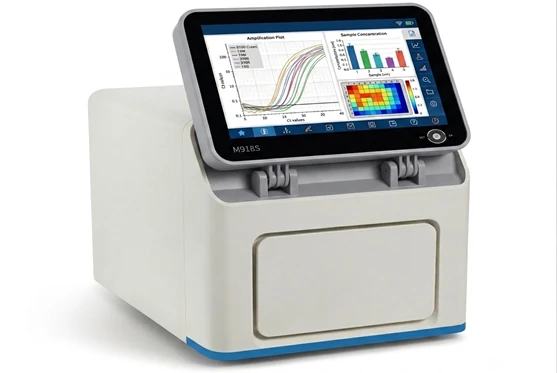
Don't skip software and data export
The instrument is only half the workflow. Check whether the analysis software supports the quantification methods you need out of the box, whether run reports export in a format your LIMS or downstream tools accept, and how easy it is to standardize analysis settings across operators.